
Which ad platform makes you declare AI on an ordinary commercial ad?
Meta's advertiser duty covers social issue, election and political ads. Google's help page names New York. YouTube's rule is written for people uploading videos. One platform of the four asks an ordinary commercial advertiser to declare anything.

What is in here
TikTok, and of the platforms I read, only TikTok. Its advertising policy tells every advertiser to apply the AIGC label or add a clear disclaimer of their own, and says an undisclosed ad will be rejected or restricted. Meta's advertiser duty covers social issue, election and political ads. Google's covers election ads, plus an AI label setting it points at EU, Indian and New York requirements. YouTube's disclosure is a rule for people uploading videos, and no Google page says whether it reaches inventory you buy.
- Which switch exists on which platform, and where in the interface it lives
- Meta's advertiser duty is narrower than almost every summary of it, and the AI Info label is Meta's own detection rather than your declaration
- Google's help page names a US state law by name, and tells you all content is subject to policy regardless of how it was made
- Which edits count as significant and which do not, with the two places the platforms disagree
- A test you can run on your own disclosure line at feed size, before it ships
Four platforms, counted
Read at each platform's own page on September 3, 202601Do you have to tell Meta your ad was made with AI?
Not for an ordinary commercial ad. Meta's help page puts the duty in one lane: "For ads about social issues, elections or politics, advertisers are already required to disclose if the image, video or audio are digitally created or altered, including through the use of third-party AI tools." A skincare brand running a generated hero shot has no Meta disclosure to make.
I am reading these policy pages as the person who uploads the files, not as a lawyer, and all of them are linked below. Most write-ups mix two systems. Meta's AI Info label is applied by Meta, on its own detection, and it goes on detected AI content without any advertiser action from mid-2026, on a date Meta's page gives as June 1, 2026, read as paraphrase rather than verbatim. Meta's disclosure duty is a self-declaration in the ad creation flow, and exists only in the political lane.

Four platforms, by trigger, label, who applies it, and what happens if you skip it
Ordinary commercial ads, not political| Dimension | TikTok | Meta | Google Ads | YouTube |
|---|---|---|---|---|
| Does an ordinary ad need a declaration? | Yes. Yes, for significantly edited or AI-generated creative | No. No. Only social issue, election and political ads | Partly. No, except the AI label setting for EU, Indian and New York requirements | No. This is an uploads rule, not an ads rule |
| What the label is | The AIGC label, or your own clear disclaimer, caption, watermark or sticker | AI Info, applied by Meta on detection | Google's own strings for some formats, your own line for the rest | The AI use attribute, surfaced in the player or the expanded description |
| Who applies it | You, before the ad runs | Meta, from its own detection, from mid-2026; Meta's page gives June 1, 2026, read as paraphrase | You, in campaign settings or on the creative | You, in Studio; YouTube may apply it for you |
| What happens if you skip it | The ad is rejected or restricted | In the political lane: the ad is rejected, and repeated failure may bring advertiser penalties | Disapproval, then a warning, a three-day hold, a seven-day hold, suspension | A label applied for you, up to removal and Partner Program suspension |
| Political ads | No. None accepted at all | Yes. A hard disclosure duty with three named triggers | Yes. Verified election advertisers, with a build requirement | Partly. Runs through the Google Ads policy, not Studio |
One correction to carry out of that table. There is no Meta advertising standard called Unrealistic Outcomes; the URL returns 404 and the Wayback Machine shows it doing so as recently as February 2026. What rejects an overstated generated before-and-after is Unacceptable Business Practices, which prohibits ads that "Use deceptive or exaggerated claims about the success of a product or service" and the same about health-related benefits. The claim gets you rejected. What a viewer is told about a person on camera is the FTC's question rather than the platform's.
You must not misrepresent Output as human generated when it is not.
Meta, Ad Creative Generative AI Terms
02TikTok is the one that asks
Its advertising policy, in the section on edited media and AI-generated content, says significantly edited media and AIGC is allowed if you "Apply the AIGC label , or by adding a clear disclaimer, caption, watermark, or sticker of your own." The consequence sits in the same section: "If we identify AI-generated content that has not been disclosed, your ad will be rejected or restricted." It binds every advertiser, and TikTok tells the uncertain ones to label anyway.
Three things trigger it: fully AI-generated image, video or audio; the primary subject doing something they did not do; and voice cloning putting words in somebody's mouth. TikTok also bars creative using a public figure's likeness without permission. One caveat, stated plainly because I would want it stated for me: TikTok's domain does not answer from this machine, so every TikTok line here comes from an archive capture.
What each platform's page says, in more detail than a table holds
One tab per platformA narrow duty and a wide label
The advertising standards say advertisers "must also disclose when a social issue, elections, or political ad contains a photorealistic image or video, or realistic sounding audio, that was created or edited using third-party generative AI tools" to depict a real person saying or doing something they did not, to show a realistic person who does not exist or an event that did not happen, or to present something as a true recording when it is not.
The consequence is stated on the same page: an ad that should have been disclosed and was not is rejected, and repeated failure may bring penalties against the advertiser.
- The organic rule uses the word organic and asks people posting to use Meta's AI-disclosure tool. Do not let a summary turn that into an advertiser duty.
- Meta's AI Info label covers ads fully created or materially edited with Meta's own generative features. Background generation and image generation count as material edits; resizing and color correction do not.
- Detection runs off IPTC metadata, invisible watermarks and C2PA indicators, plus Meta's own watermarking.
- Where the switch is
- The ad creation flow, political lane only
- Who labels everything else
- Meta, on detection, from mid-2026; the page gives June 1, 2026, as paraphrase
The strict one, and the one I could not read live
The rule applies to all advertisers rather than political ones, and TikTok's own avatar workflow labels itself: an AI-generated label is added to all exported videos from Symphony Creative Studio.
TikTok accepts no paid political advertising at all, in its own words because the nature of political ads is not something it believes fits the TikTok experience. So the political disclosure question that dominates Meta and Google never arises here.
- Explicitly insignificant, and therefore not requiring a label: lighting, brightness and color saturation adjustments, background removal or modification, and denoising.
- The organic creator rule was released August 14, 2025 and took effect September 13, 2025. Unlabeled content may be removed, restricted, or labeled by TikTok's team.
- Even with a label, AIGC showing a public figure making a product endorsement that never happened is not allowed.
- Where the switch is
- The AIGC label, or your own disclaimer
- Sourcing
- Archive-verified only, capture of January 15, 2026
No AI mandate, three lines that do the work
The policy hub sets out prohibited content, prohibited practices, restricted content and features, and editorial and technical requirements, and carries no AI or synthetic-media labeling mandate. AI creative is governed instead by the misrepresentation policy.
The line that catches an aspirational generated result is the middle one: making inaccurate claims, or claims that entice the user with an improbable result even if that result is possible, as the likely outcome a user can expect, is not allowed.
- Its own help page tells advertisers to add labels directly to creatives or use the AI label setting for EU, Indian and New York requirements. A platform naming a US state law by name is worth knowing about.
- The same page states that all advertising content is subject to Ads Policy regardless of how it is created.
- Severe misrepresentation violations bring immediate suspension without prior warning and a permanent ban, with appeals only in compelling circumstances.
- Where the switch is
- Campaign settings, Altered or synthetic content
- Also
- The AI label setting, or labels on the creative itself
A creator rule, and an open question
Creators disclose in YouTube Studio, under Attributes, in the AI use setting, when AI meaningfully alters or generates photorealistic content: a real person appearing to say or do something they did not, altered footage of a real event, or a realistic scene that never occurred.
The page addresses videos uploaded to a channel. It is silent on inventory bought through Google Ads, and I found no Google or YouTube page extending the Studio attribute to purchased ads. Treat them as two systems and say so, rather than asserting a link that no source supports.
- Exempt: non-realistic and animated content, beauty filters, color adjustment, cloning your own voice, captions, script and thumbnail generation, and audio or video repair and upscaling.
- One line worth sending to a nervous client, verbatim: "Disclosing AI content won't limit a video's audience or impact its eligibility to earn money."
- The rest of the market, briefly: Amazon requires that AI-generated content not mislead customers; Pinterest asks nothing of ordinary ads; Snapchat bans synthetic avatars and manipulated likenesses of real people used misleadingly; LinkedIn's ads policy has no AI provision at all.
- Where the switch is
- Studio, Video details, Attributes, AI use
- Does it reach bought inventory
- No page says either way
Six names for one idea, and one that is not a platform's at all
Search itAIGC labelTikTok
AI InfoMeta
Altered or synthetic contentGoogle Ads
AI use attributeYouTube Studio
Content credentialsThe file itself
Synthetic performerNew York law
03Which edits count as significant?
Every platform draws a line between touching the file and changing what it depicts, and all four draw it in nearly the same place. Resizing, cropping, color correction and repair sit on the safe side everywhere. A whole generated image, or a real person made to say something they did not, sits on the other side everywhere. Two edits fall in the gap. Those are the ones worth knowing.
Where each platform puts the line, from routine to unmistakable
Seen from the sideLayer four is the one that catches working teams out. Generating a background is routine, it happens on most of what we deliver, and two of these four platforms classify it in opposite directions. Layer five starts a legal duty rather than a platform one, and the state law behind it has a $1,000 first-violation penalty that has nothing to do with whether an ad gets approved.
Type your disclosure line and read it at feed size
Type in it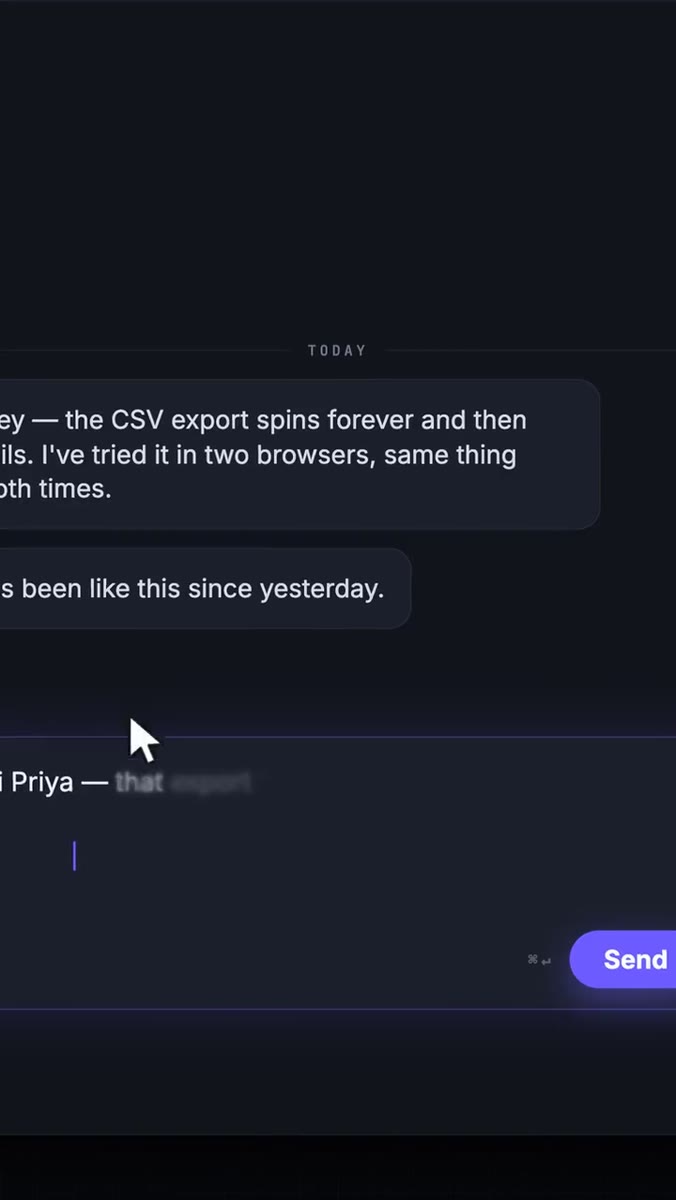
04What does Google Ads require of a US advertiser?
Nothing on an ordinary ad, and two specific things elsewhere. Verified election advertisers must disclose synthetic content that inauthentically depicts real or realistic-looking people or events, wherever verification is required. The United States is one. Mechanically it is a checkbox in the campaign's altered or synthetic content setting. Separately, Google's help page tells advertisers to add labels to creatives, or use the AI label setting, for EU, Indian and New York requirements.
That second sentence is the one nobody expects: a platform help page naming a US state law before most agencies have. The same page carries the line to put in front of a client who thinks generation changes anything, that all advertising content is subject to Ads Policy regardless of how it was made. Google writes the election disclosure for you in mobile feeds, Shorts on mobile and in-stream video. Everywhere else, you build it.
Where the switch sits, on each platform
Copy itMETA ads about social issues, elections or politics only
> ad creation flow > the disclosure question
Meta then surfaces it on the ad and in the Ad Library.
Everything else: no advertiser switch exists. The AI Info
label runs on Meta's own detection from mid-2026, on a
date Meta's page gives as June 1, 2026, as paraphrase.
TIKTOK every advertiser, political or not
> apply the AIGC label, OR add your own clear disclaimer,
caption, watermark or sticker
Symphony avatar exports already carry an AI-generated label.
GOOGLE verified election advertisers
> campaign settings > "Altered or synthetic content"
Everyone else, where EU, Indian or New York requirements
apply: the AI label setting, or labels on the creatives.
YOUTUBE uploads to a channel, not bought inventory
> video details > Attributes > "AI use"
Photorealistic content may also get a label in the player.The check we run between the cut and the upload
Playback05YouTube's rule is written for creators, and nobody says whether it reaches ads
This is the cleanest example of the confusion the whole subject runs on. The YouTube altered-content disclosure lives in Studio, under a video's Attributes, written throughout as an instruction to somebody uploading to their own channel. The penalty language is about creators and the Partner Program. Nothing on the page addresses inventory bought through Google Ads, and no page I could find extends it there.
So the answer to a client asking whether a YouTube ad needs the AI attribute is that the two systems are separate and nobody has said they connect. Less satisfying than a rule, more useful than a guess. If the brand also posts the same cut on its own channel, the Studio attribute applies to that upload on its own terms, and the craft reasons a generated cut reads as generated matter more than the attribute does.
06What to settle before you upload
Whoever uploads the file needs one thing from whoever built it: a note saying which edits were generative, shot by shot. On our deliveries that note travels with the cut, because the person clicking upload is usually not the person who chose the background. Everything below takes ten minutes once that note exists, and an afternoon of guesswork when it does not. Where the file also has to clear a hard format spec, like Amazon Sponsored Brands video, run both lists in one pass. If the buy reaches the EU or the UK, that is a different rulebook again, and the sister journal covers it at its own sources.
Who labels the ad, and at which moment
Four stages, one switchSeven checks between the finished cut and the upload button
Tick as you go - it remembersQuestions people actually ask
Open what you needDoes Meta require you to disclose AI generated ads?
Only for ads about social issues, elections or politics. Meta's own help page limits the advertiser duty to that lane, including where third-party AI tools were used. For every other ad Meta labels rather than asks: its AI Info label goes on content Meta detects as AI-made, without any action from you, and on ads made with Meta's own generative creative features. A generated skincare hero shot from a third-party tool carries no Meta disclosure obligation.
Do I have to label AI content on TikTok ads?
Yes. TikTok's advertising policy tells advertisers to apply the AIGC label or add their own clear disclaimer, caption, watermark or sticker to significantly edited or AI-generated creative, and says an undisclosed ad will be rejected or restricted. It applies to all advertisers, not only political ones, and TikTok tells anyone unsure to label anyway. Every TikTok line here is archive-verified rather than read live, so confirm it from a US connection.
Will Google Ads reject an ad made with AI images?
Not for being AI-made. Google's policy hub carries no AI labeling mandate and its help page states that all advertising content is subject to Ads Policy regardless of how it is created. What rejects a generated ad is the misrepresentation policy: manipulated media that deceives, claims that entice with an improbable result, and misleading statements about identity or qualifications. Severe violations bring immediate suspension without a prior warning.
Does YouTube's AI disclosure apply to ads I pay for?
No page says either way. The altered-content disclosure lives in YouTube Studio under a video's Attributes and is written for creators uploading to their own channel, with consequences framed around removal and the Partner Program. It is silent on inventory bought through Google Ads, and no Google or YouTube page extends it there. Treat them as two separate systems until one of those pages says otherwise.
Does color correcting an ad count as AI editing?
No, on every platform that addresses it. Meta says resizing and color correction are not material edits. TikTok names lighting, brightness and color saturation adjustments, background removal and denoising as insignificant. YouTube exempts color adjustment, beauty filters, captions and upscaling. The disagreement is over background replacement, which Meta treats as material and TikTok treats as insignificant.
Can a platform tell that my ad was made with AI?
Increasingly, yes, and not by looking at the picture. Meta's detection reads IPTC metadata, invisible watermarks and C2PA indicators. Since August 2, 2026 California requires large generative AI providers to embed a latent disclosure carrying the provider name, system version, timestamp and a unique identifier in every generated image, video and audio file, and from January 1, 2027 large platforms must surface that data rather than strip it.
The platform question has a small answer and a large one. The small one is a toggle on TikTok and a checkbox on Google. The large one is that the file is starting to answer for you: California makes the provenance get embedded at the vendor, and from January 2027 the biggest platforms have to surface it rather than strip it. Whatever you declare at upload is going to be read against the metadata, not against your memory of the brief.
If the problem on this page is yours, this is the studio that fixes it.
- Built, not brokered. The person who wrote this reads your brief and makes the ad: over a thousand finished creatives, film and stills, for DTC brands and hotels.
- Fast enough to test. A first cut inside 72 hours, platform-native and built from your own product, then a monthly plan when you want a steady supply, and a number in the reply.
- Honest about the odds. We measure and publish our own keep rate: 43% of what clears every automated check survives our eye, and you only ever see the survivors.
Send a link. Get one finished ad, with the platform switches written down beside it.
We build one finished cut from your product, free, before any money changes hands, and it is yours to run either way. The delivery note says which edits in it were generative, so whoever uploads the file knows what to declare without guessing at four different policy pages.

Runs Ephoria, an ad-creative studio, and builds the work himself: over a thousand finished creatives, film and stills, for DTC brands and hotels. Writes here about what buying and making ad creative involves, in dollars and in days, including where the studio loses. The person who reads your brief is the person who builds the ad. Send him something to make, or see the studio's work and plans.
Where the numbers came from
- Meta. Advertising Standards: social issue, electoral or political advertising - read 2026-09-03; the verbatim advertiser disclosure requirement, its three triggers, and the consequence language about rejection and advertiser penalties. Meta's automated AI Info labeling on detection from June 1, 2026 was read off this page as paraphrase rather than verbatim.
- Meta. Help center: artificial intelligence, article 355108217670024 - read 2026-09-03; states that advertisers are already required to disclose digitally created or altered media for ads about social issues, elections or politics, including through third-party AI tools, and describes when the AI Info label is applied to Meta's own generative features.
- Meta. Ad Creative Generative AI Terms - read 2026-09-03; the source for the line that you must not misrepresent Output as human generated when it is not, and must not alter or remove any watermark or content-authenticating metadata.
- Meta. Advertising Standards: unacceptable business practices - read 2026-09-03; the standard that rejects overstated creative. There is no Meta advertising standard called Unrealistic Outcomes: that URL returns 404 and the Wayback Machine shows it 404ing as recently as February 2026.
- TikTok, via the Internet Archive. TikTok advertising policies: misleading and false content - archive-verified 2026-09-03 from a January 15, 2026 capture of a page stamped Last updated November 2025. TikTok's own domain is unreachable from this machine, so every TikTok line here is an archive read and should be re-checked live from a US connection before you rely on it.
- TikTok, via the Internet Archive. Community Guidelines: integrity and authenticity, edited media and AI-generated content - archive-verified 2026-09-03; the organic creator rule, released August 14, 2025 and effective September 13, 2025. Same access caveat as the advertising policy above.
- TikTok, via the Internet Archive. How to create avatar videos with Symphony Creative Studio - archive-verified 2026-09-03; states that an AI-generated label is added to all exported videos from the avatar workflow. Same access caveat.
- Google Ads Help. Answer 14150986, on generated content and the AI label setting - read 2026-09-03; tells advertisers to add labels directly to creatives or use the AI label setting for EU, Indian and New York requirements, and states that all advertising content is subject to Ads Policy regardless of how it is created.
- Google Ads Help. Answer 6020955, the misrepresentation policy - read 2026-09-03; the three lines that govern AI creative outside the election lane: manipulated media, improbable-result claims, and misleading statements about identity, affiliations or qualifications.
- Google Ads Help. Answer 13755910, political content and altered or synthetic content - read 2026-09-03; verified election advertisers must disclose synthetic content that inauthentically depicts real or realistic-looking people or events, with at least seven days' notice before enforcement. Routine resizing, cropping, color correction, defect removal and background edits are exempt where they create no false depiction.
- Google Ads Help. Answer 6014595, disclosure requirements for election ads - read 2026-09-03; Google auto-generates the in-ad disclosure for mobile feeds, Shorts on mobile and in-stream video. For every other format the advertiser builds it, clear and conspicuous, in a location likely to be noticed. The example strings are Google's own.
- Google Ads Help. Answer 10922738, the three-strike system - read 2026-09-03; a warning, then a three-day account hold, then a seven-day hold, then suspension. Misrepresentation is not on that page's strike list and runs through ordinary disapproval and suspension instead.
- YouTube Help. Answer 14328491, disclosing altered or synthetic content - read 2026-09-03; the AI use attribute in YouTube Studio, the exemption list, the consequence language, and the line that disclosing AI content will not limit a video's audience or its eligibility to earn money. The page addresses videos uploaded to a channel and is silent on purchased ad inventory.
- Amazon Ads. Help article G4U9JBZH3664JWX2, AI-generated content in advertising - read 2026-09-03, page updated July 22, 2026; requires advertisers to ensure AI-generated content does not mislead customers, flagging photorealistic but inaccurate depictions and content mimicking real people without consent. Read on a delegated pass and recorded as paraphrase, so check the live wording before quoting it to a client.
- California Legislative Information. California AI Transparency Act, Business and Professions Code division 8, chapter 25 - read 2026-09-03; operative August 2, 2026. Covered providers must embed a latent disclosure in generated image, video and audio, and large online platforms with over 2,000,000 unique monthly users must surface rather than strip it from January 1, 2027.
Every figure above links to the place it was published, with the date it was read. Numbers marked as ours are measured inside this studio and we say so where they appear. We do not print a statistic we cannot point at.